Skip to content
Association being formedThis site presents a project still in preparation. No donations are being collected yet.
Sunu Mbourou

The project

A training centre, a school restaurant, a market garden

The integrated project led by the Kaolack Departmental Council has three parts: people learn a trade, they produce, and what they produce pays for the training.

Local grains

80%

Millet, maize and sorghum, grown in the department

Imported wheat

20%

Today’s bread depends on it almost entirely

2026Project description, Kaolack Departmental Council

The starting point

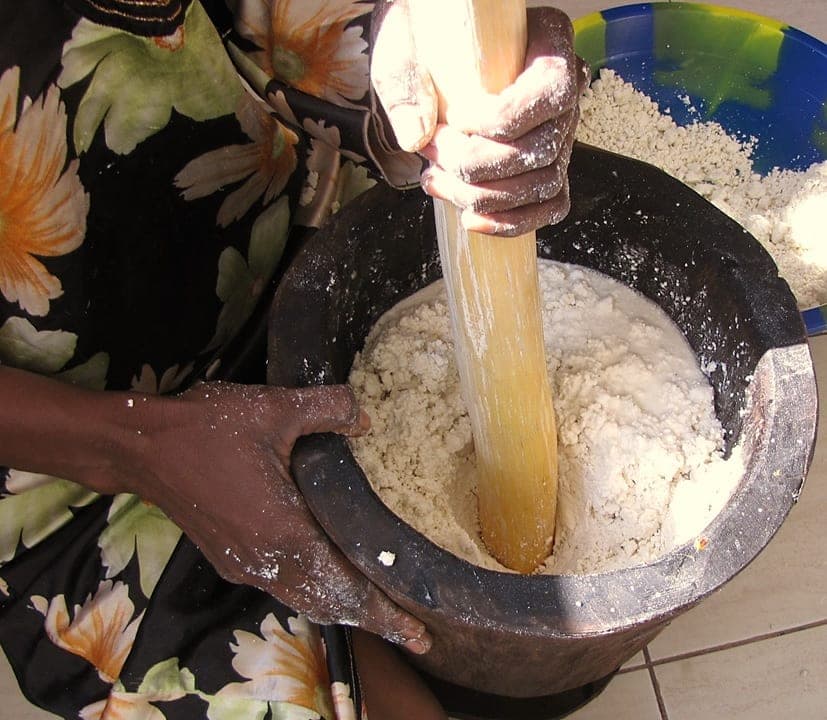
Two hands pounding flour in a mortar with a wooden pestle.
Grinding flour by hand in a mortar: the work the centre sets out to equipIllustrationT. K. NaliakaCC BY-SA 4.0Wikimedia Commons

Turning grain into flour, then flour into bread, currently takes manual labour and equipment the department does not have. That is the missing link the training centre sets out to equip.

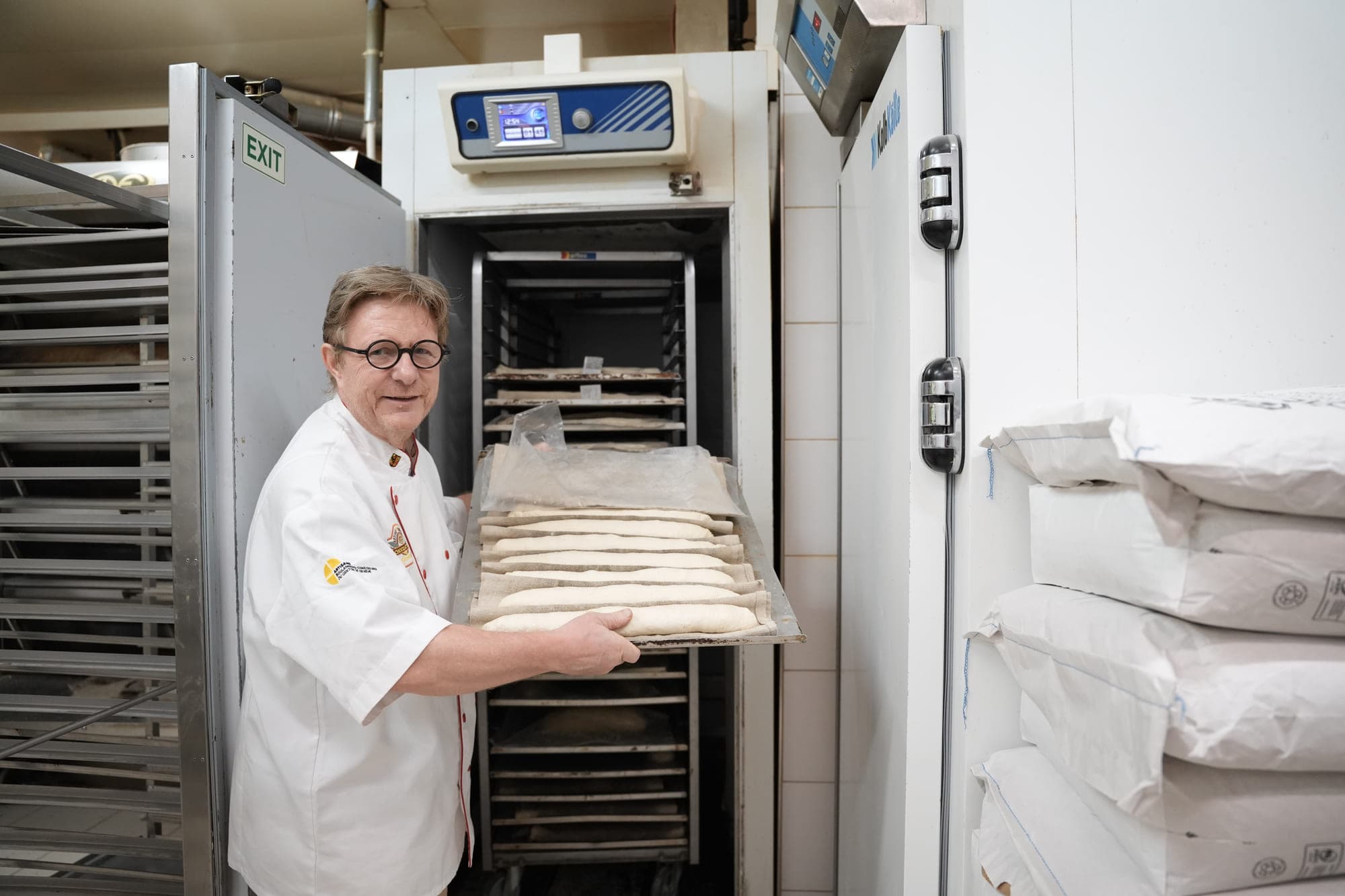
The same work, once equipped: mixer, proofing cabinet, oven. This is the equipment the centre has to bring together, and the trade it has to pass on. Both, not one without the other.

A baker slides a board of raw baguettes, still covered with a cloth, into a rack.
Shaped baguettes before baking, in a Geneva bakehouseGeneva · 28 August 2026
The sector remains heavily dependent on imported wheat flour, which weakens food sovereignty and limits the creation of local value.
Project description, Kaolack Departmental Council, our translation2026

Senegalese baking runs on wheat flour, and wheat is not grown in the country. Every loaf sold therefore takes value out of the territory, and makes the price of bread depend on a world market that nobody can influence locally.

Yet the department grows millet and sorghum, and it is the region’s largest sorghum producer. What is missing is not the raw material. It is the know-how to process it, and a place to learn it.

Hence the project’s numerical target: a flour made of 80% local grains, against a dependence on imported wheat that is almost total today.

The three components

Train, produce, fund

Each component has a teaching function and an economic one. That is what separates this project from a conventional training centre that depends on a permanent subsidy.

01

Baking and food processing

Training centre

A dual approach (theory, practice, work placement) organised in eight modules, from the craft of bread-making to equipment maintenance. The training focuses on processing the grains grown locally.

  • Artisanal and modern baking
  • Pastry and viennoiserie
  • Processing local grains
  • Fermentation and bread-making
  • Hygiene and food safety
  • Business management and entrepreneurship
  • Equipment maintenance
  • Marketing and sales
02

School-enterprise

Poultry restaurant

A unit that is both educational and economic: it trains people in catering and in processing poultry products, and it earns the income that keeps the centre running. This is the component that makes the whole thing last without a permanent subsidy.

  • Hands-on training in catering
  • Processing poultry products
  • Preparing and selling meals
  • Income for the centre
03

Agroecological production

Market garden and orchard

The upstream link: growing part of the inputs on site, training people in agroecological practices, and diversifying the site’s income.

  • Vegetables: tomato, onion, chilli, okra, aubergine
  • Fruit trees: mango, papaya, citrus, moringa
  • Agroecological production
  • Practical training in the field

Specific objectives

What the project sets out to achieve

  1. 01Set up a vocational training centre in baking and food processing
  2. 02Train young people and women for jobs in baking, catering and food processing, and help them find work
  3. 03Promote the use of local grains
  4. 04Provide refresher and advanced training for bakers already in business
  5. 05Develop the poultry restaurant as an economic and educational unit
  6. 06Set up the market-garden and orchard unit
  7. 07Create lasting jobs and strengthen local entrepreneurship

What it aims for

The project in four figures

80 / 20local grains (millet, maize, sorghum) to imported wheat flour: the target composition
2026Project description, Kaolack Departmental Council
100 to 200young people trained each year, at full capacity
2026Project description, Kaolack Departmental Council
45%women targeted in each cohort
2026Target set by the project partners
8training modules, from bread-making to equipment maintenance
2026Project description, Kaolack Departmental Council

Beneficiaries

Who the project is for

Direct

  • Young people looking for work
  • Women entrepreneurs
  • Bakers and artisans in business
  • Restaurant owners
  • Farmers

Indirect

  • Farming cooperatives
  • Professional organisations
  • Consumers in the department
  • Local authorities

Built to last

Why it can hold up over time

A project that stops when the aid stops was pointless. Here is what already exists on the ground so that this one keeps going.

ConditionWhat already exists in Kaolack
Maintaining the machinesThe department’s artisans already build and maintain farm equipment.
The right to trainApprenticeship is part of Senegal’s vocational training system.
Somewhere to set upA Chamber of Trades with more than three thousand artisans, and an artisans’ village already standing.
Young people to trainTwenty youth centres, and a departmental youth council.
Ways to financeSeveral microfinance institutions on the ground, including the Chamber of Trades’ own mutual fund.
Someone to sell toNine of the region’s eleven permanent markets, at the crossroads of four countries.

2025Kaolack department development plan 2024-2028

An answer to a local request

Three objectives the department had already set itself

The first is not an interpretation: a training centre for the artisanal trades appears, as such, in the action plan the department adopted for 2024-2028.

Train

A training centre for the artisanal trades

Listed in the department’s action plan for its first year

The training centre and its eight modules

Grow

Intensify agriculture and livestock farming

The first objective of the department’s plan

The irrigated farms of the four communes, the grain supply chain, the school restaurant

Open up

Promote young people and women

One of the objectives of the department’s plan

One to two hundred young people trained each year, 45% of them women

What the project shifts

Beyond bread

  • Quality education

    Fills the absence of training centres for the artisanal trades, which the department itself names

  • Decent work

    Addresses the high rate of youth unemployment and the difficulty young people have in accessing financing

  • Zero hunger

    Local processing of grains, food supply for the communes

  • Responsible production

    Geneva machines given a second life instead of being scrapped

  • Gender equality

    A stated target of 45% women in each cohort

  • Partnerships

    Cooperation between Geneva artisans, an elected local authority and the grouping of its four communes